Laying on my bed, in my dark bedroom. Listening to the rain as it hit my window. The sound of the thunder and the sight of the lighting calms me down. I am tired of depression and anxiety taking up space in my brain. I try to ignore it, but the feeling is getting stronger. Tears rolling down my face because I can’t take it anymore. Feeling worthless and feeling suffocated of the darkness of depression…I feel afraid of giving into my horrible negative thoughts. I shut my eyes and I see a beautiful face with a gorgeous smile looking at me. She’s an angel, glowing like the bright yellow sun. She looks at me and say ” It will be okay” She hugged me and kiss me on the forehead. Before she left she told me “Continue to make me proud. Don’t give up. I love you my daughter.” I told her okay mom. I got this. I love you too. I opened my eyes and felt a feeling of peace.
My Healing Journey


The growth that I am experiencing is my healing and spiritual growth. Being sober for almost four years, going to therapy, and working on my mental and physical health is an amazing journey. My spiritual growth is important to me because it brought me closer to God. I’ve been working on building a relationship with him and it has made me rethink about my life choices. Looking back on how I was in my late twenties versus now being thirty-three years old, I have changed to become a better me. I want to share my life experiences with the world to inspire people. To let them know they can overcome any challenges and obstacles in their life.
10 Ways to Practice Emotional Self-Care
- Meditate
Meditation can sound like an intimidating practice, but it doesn’t have to be. Its about having a quite moment to yourself. Take a few deep breathes to clear your mind.
2. Be Present
Stay in the present moment. If your mind is constantly jumping between the past, present, and future, it is draining your energy.
3. Forgive yourself
The best way to release past burdens and trauma is to forgive yourself and choose love instead. If you are not ready to let go, simply honor your willingness to acknowledge it.
4. Take the High Road
Use the conflicts and arguments in your life as a test to take the high road. Every time you choose peace over conflict, you strengthen your ability to protect your emotional well-being.
5. Let go of Judgement
Although judgment may feel good at the moment, remember that inner peace always feels better in the long run.
6. Affirmations
The number one thing to remember when using affirmations is you must believe. Gently replace negative thoughts to more positive thoughts.
7. Gratitude and Appreciation
Prioritize the feeling of gratitude by intentionally showing appreciation for people and things around you. Gratitude is the best way to get out of an emotional rut quickly.
8. Always Choose Happiness
Whenever you get into circumstances that try to threaten your happiness, ask yourself this simple question: “Would I rather be right or happy?.
9. Explore Spirituality
Spirituality can offer a place of calm and peace like no other practice. The key to finding the spiritual path that resonates with you is to have an open heart and an open mind.
10. Follow your Intuition
Learning to trust in your intuition is incredibly empowering and life changing. It’s innate and within all of us, all you have to do is have in it.
For more information or other tips on mental health and self-care: millennial-grind.com By: Kenneth Wong
Trichotillomania Disorder

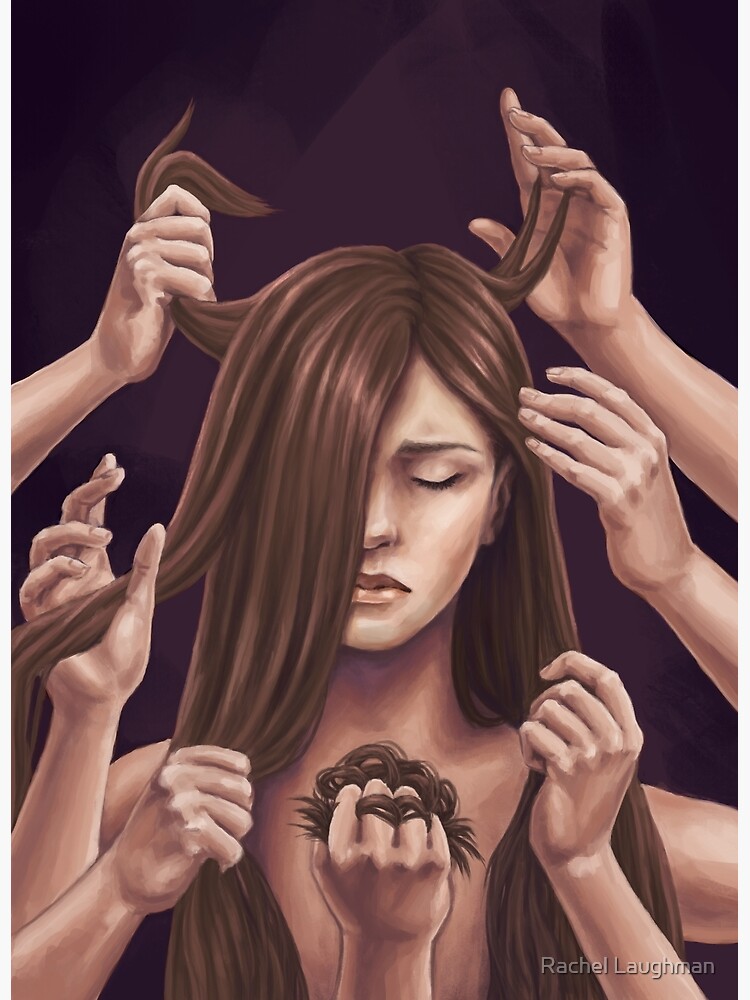
Trichotillomania is a disorder that involves recurrent, irresistible urges to pull out body hair from the scalp, eyebrows, or other areas of the body. The cause of this disorder is a way for an individual to deal with stress or anxiety. A chemical imbalance of brain, similar to obsessive compulsive disorder changes in hormone levels during puberty. Although the cause of this compulsive disorder is largely unknown, it appears that trichotillomania can be triggered by an initial trauma. This indicates that this particular disorder is a response behavior, rather than a stand alone illness. This disorder won’t go away on its own. It is a mental health disorder that requires treatment. The options includes counseling and medications, such as antidepressants.
Types of therapy that may be helpful for trichotillomania include:
- Habit reversal training. This behavior therapy is the primary treatment for trichotillomania. You learn how to recognize situations where you’re likely to pull your hair and how to substitute other behaviors instead. For example, you might clench your fists to help stop the urge. Other therapies may be used along with habit reversal training. A variant of this technique, called decoupling, involves quickly redirecting your hand from your hair to another location.
- Cognitive therapy. This therapy can help you identify and examine distorted beliefs you may have in relation to hair pulling.
- Acceptance and commitment therapy. This therapy can help you learn to accept your hair-pulling urges without acting on them.
A lost little girl


She was 12 years old when it happened. Everything changed when her mother died from stomach cancer. She ran to the waiting room in the hospital in fear of something bad happening. The words from her uncles mouth, “Your mom passed away.” It felt like his words wasn’t clear to her ears. The room was spinning, she felt like she was dreaming and wanted to wake up. Her world was turned upside down. She never thought in a million years, that something so tragic could happen to her. 12 years-old without a mom. How was she suppose to live her life without a mother to guide her into the woman she was created to be? She would questioned herself… Why did this happen to me? Why did she have to leave me so soon? At 12 years-old is a young age to loose a mom. She felt angry, sad, and confused. Who is she?
I am that lost little girl.
A Letter to my Depression and Anxiety


Dear Depression and Anxiety,
(sigh) Where do I start? You two make me overwhelm, emotional and stressful. My brain can’t handle being scared and sad at the same time. Everyday I feel like its a battle trying to find peace so I can get through the day.
Depression, you make me feel like everyone is against me. You remind me of my childhood trauma of the hurt and pain from losing my mom from cancer. Most time you give me the feeling that nobody wants to be in my life and I’m a complete failure.
Anxiety, you make me scared of everything that I want to do. You keep me in a small box to make me feel safe. I feel like I can’t be myself with you around.
Having you both in my head it too much for me. I want to be free.
Reconnect with Myself


About a month ago, I graduated from college with an associates degree in psychology. I spent three years of studying and working hard. Now that I have my degree…What’s next? Instead of taking a summer class like I had planned, I decided to take a break. I need to reconnect with myself. I want to spend more time with myself by doing things that makes me happy. Its time for me to recharge and focus on my mental health. I’m learning that I need to be here for me and love myself more. As I’m going through my healing journey, I’m starting to realize its okay to spend some time alone and take care of myself.
Obsessive Compulsive Disorder

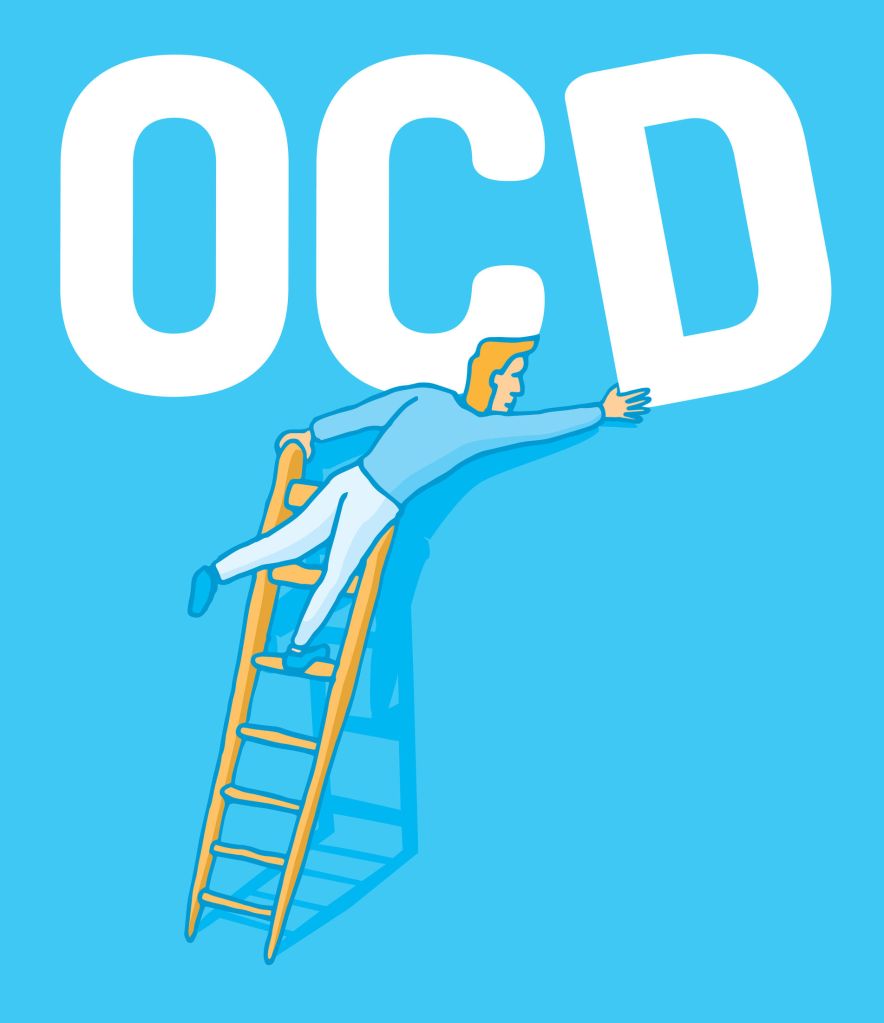
Obsessive-Compulsive Disorder (OCD) is a disorder in which people have recurring, unwanted thoughts, ideas or sensations (obsession’s that make them feel driven to do something repetitively compulsions).
Different types of OCD
There are no official classification or subtypes of OCD. Research suggests people experience OCD Symptoms in four main categories: cleaning and contamination, symmetry and ordering, forbidden, harmful, or taboo thoughts and impulses.
Cleaning and Contamination: Contamination OCD is a common OCD subtypes in which a person obsesses over contracting an illness or spreading germs.
Symmetry and Ordering: In OCD, symmetry obsessions are characterized by the need for things to be perfect, exact or “just right,” symmetrical, or correctly aligned, and related compulsions include ordering and arranging, evening up or aligning things and touching or tapping.
Forbidden and Harmful: People with OCD characterized by forbidden thoughts may intrusive thoughts that are often violent or sexual in nature.
Taboo thoughts and impulses: Unacceptable or taboo thoughts in OCD include sexual aggressive, and religious obsessions. It appears that individuals with this type of primary OCD experience more obsession’s and fewer overt compulsions, and thus, may take longer to treat.
OCD Symptoms
OCD often centers on themes such as fear of germs or the need to arrange objects in a specific manner. Symptoms usually begin gradually and vary throughout life.
What Causes OCD
Compulsions are learned behaviors, which become repetitive and habitual when they are associated with relief from anxiety. OCD is due to genetic and hereditary factors. Chemical, structural and functional abnormalities in the brain.
Treatment for OCD
Support Group
Cognitive Behavioral Therapy
Aversion Therapy
Psychoeducation
Rational Emotive Behavior Therapy
Exposure and Response Prevention
Psychotherapy
Systematic Desensitization
Group Psychotherapy
How does OCD affect Peoples Mental Health
People with OCD may have symptoms of obsessions, compulsions, or both. These symptoms can interfere with all aspects of life, such as work, school, and personal relationships. Obsessions are repeated thoughts, urges, or mental images that cause anxiety.
Decluttering your Mental Space

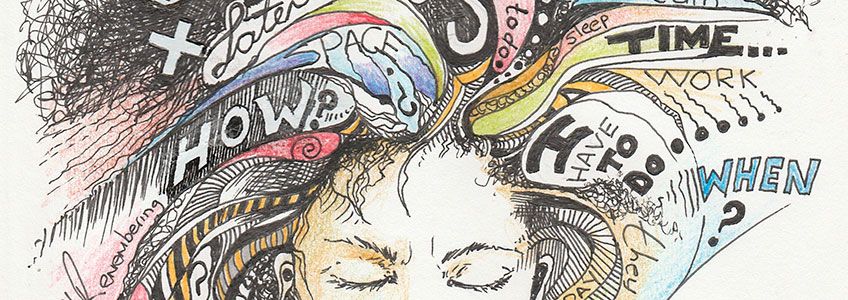
Decluttering your mental space means to remove unnecessary items, and to declutter your mind means to remove unnecessary thoughts from your mind. Thoughts that just add noise and stop you from thinking clearly.
Mental clutter can include worrying about the future, ruminating about the past, keeping a mental to-do list, complaints, and so on.
It refers to times when our mind has too many thoughts which makes it difficult to process and focus. It hinders our productivity, balance and even our mental health. Clutter can affect the anxiety levels and sleep.
6 Ways to Declutter your Mind and Free up Mental Space
Declutter your Physical Environment
Physical clutter leads to mental clutter. The clutter bombards the mind with excessive stimuli, which forces the brain to work over time. As you declutter your physical space you will discover that your mind is also decluttered.
Write it Down
You don’t have to keep everything stored in your brain. Having a planner to write down important information is a good idea to help you remember. This can include appointments, work schedules, school assignments,. and so on.
Keep a Journal
Keeping a journal is similar to previous point, “write it down,” but with more depth. A journal allows you to let go the inner chatter that’s constantly interrupting your thought process when you’re trying to get important things done. Writing down your emotions is a way to express yourself and letting go the pain and hurt that keep bottled up in your mind.
Let go of the Past
Mind clutter is often related to the past. Most people keep a large cabinet of mental drawers stored in the back of their minds. These drawers are filled with mistakes they’ve made, missed opportunities, people they’ve hurt, past grievances, and son on.
Prioritize
Nothing creates as much brain clutter as an endless to-do list. Accept that you can’t do it all, and choose to focus on the things which are most important to you. Make a short list of your top priorities, and make sure that the bulk of your brain space is devoted to the things on that list.
Learn to Meditate
In essence, meditation is learning to focus the mind completely on the present moment. When you learn how to place all your attention on one things-such as your breath-all other thoughts disappear.
The link is provided below for more information:
Ten Ways to Declutter Your Mind and Free Up Mental Space
Late Night Thoughts pt. 6
I am walking along an outdoor path. Ahead, I see the path splits into two. The path on the left enters a dense forest, the one on the right enters a series of hills and valleys. I choose to follow the path to the hills and valleys. Far away I see a door. I am not sure what is on the other side of this door, but I am curious to know. As I am walking up the steep hills, I become hot, tired and my legs starts to burn. I come across fallen trees blocking my path and huge rocks forcing me to climb over. I want to give up, but I must get to that door. I finally make it and what reads on the door, “Exit Comfort Zone” and a list of goals I want to work on. This journey taught me there are more opportunities out there for me if I step out of my comfort zone. I will not grow if keep that door close.
 The Road to Recovery