Children’s Mental Health and Well-Being

Mental health is the way children think and feel about themselves and the world around them. It affects how children cope with life’s challenges and stresses. Being mentally healthy during childhood means reaching development and emotional milestones and learning healthy social skills and how to cope when there are problems. Mentally healthy children have a positive quality of life and can function well at home, in school, and their communities. Health and well-being underpin and determine children’s responses to their environment, to people and to new experiences. Emotional well-being includes relationships, which are close, warm and supportive, and being able to express feelings such as joy, grief, frustration and fear.

Mental health disorders can affect classroom learning and social interactions, both of which are critical to the student’s success. However, if appropriate services are put in place to support young people’s mental health needs. We can often maximize success and minimize negative impacts for students. There is a clear connection between mental health and academic performance. Helping students make the most of their education is everyone’s goal. Students struggling with depression or other mental illnesses have a harder time feeling motivated, learning, concentrating, taking tests, etc. Children and adolescents who have mental health problems may have trouble learning. They may also have difficulty completing tasks and also more likely to have lower grades and take a leave of absence from school.

Mental health affects and development by helping children develop the resilience to cope with whatever life throws at them and grow into well-rounded, healthy adults. Things that can help keep children and young people mentally well includes: being in good physical health, eating a balanced diet and getting regular exercise. It will help them feel good about their lives and can function well at home, in school, and in their communities. When a child is mentally healthy, they are able to learn the skills needed to be successful in and out of school and can bounce back (cope) when they face problems.

Schools need to realize that teaching mental health is important. Teaching mental and physical health together leads to better outcomes for children and adolescents. Students’ mental health impacts many areas of their lives, including their relationships with other people and drugs and alcohol. Good mental health allows children to think clearly, develop socially and learn new skills. Additionally, good friends and encouraging words from adults all important for helping children develop self confidence, high self-esteem, and a healthy emotional outlook on life.

Late Night Thoughts pt.7

Comfort zone is being fearful of the unknown. Not knowing what is behind the door. I know it can be scary, but behind that door with your name on it are other opportunities waiting for you. Someone once told me…If you continue to stay in your comfort zone,you won’t grow into the person that you are meant to be.

Sleep Hygiene with Mental Health

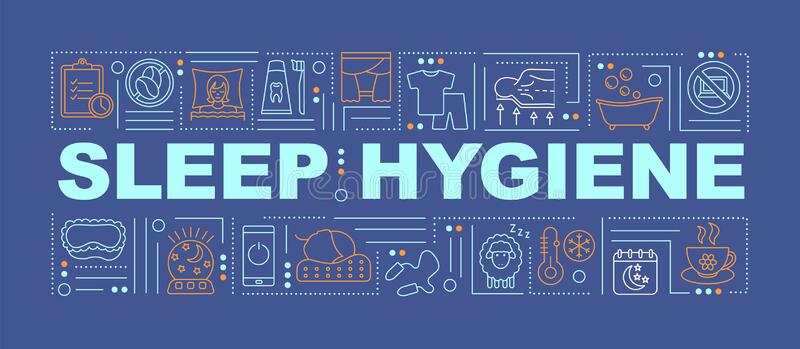
Sleep hygiene are habits and practices that are conductive to a sleeping well on a regular basis. It is also defined as behaviors that one can sleep using behavioral interventions. Establishing and practicing good sleep hygiene throughout the day impacts both the quality and quantity of sleep you get each night. Poor sleep is linked with the onset of mental health difficulties as well as the worsening of current symptoms. Poor sleep also impacts our ability to think clearly, remember things, and learn new information.

Tips for Sleep Hygiene

Regular sleep and wake times: Having a set time that you go to sleep and wake up puts your body into a rhythm. Its best to keep times the same on weekends too.

Avoid nicotine, caffeine, and alcohol: Nicotine and caffeine (found in coffee, tea, coke, chocolate) act as stimulants that make it more difficult to fall asleep.

Bed is only for sleep: To help your body form an association between bed and sleeping, avoid doing activities such as watching tv, using your computer or phone, or eating, while in bed.

Avoid daytime naps: To ensure you are tired enough to sleep at bed time, try not to sleep during the day. If you need a nap, make sure it’s for less than an hour and before 3p.m.

The right sleep environment: Create a space that is conductive to sleep. A cool room with enough blakets to stay warm. Noise level (keep things quiet by using earplugs).

Warm bath or shower: Having a hot bath or shower 1-2 hours before bed allows you to become sleepy as your body cools down.

Develop a bedtime routine: Performing a consistent ritual every night before bed reminds your body that its time to slow down.

Limit screen time: Its a good idea to stop using your computer, tablet, phone, or watching tv at least 30 minutes before bed.

Exercise: Exercising during the day can help to reduce restlessness in the evening.

A lost little girl

She was 12 years old when it happened. Everything changed when her mother died from stomach cancer. She ran to the waiting room in the hospital in fear of something bad happening. The words from her uncles mouth, “Your mom passed away.” It felt like his words wasn’t clear to her ears. The room was spinning, she felt like she was dreaming and wanted to wake up. Her world was turned upside down. She never thought in a million years, that something so tragic could happen to her. 12 years-old without a mom. How was she suppose to live her life without a mother to guide her into the woman she was created to be? She would questioned herself… Why did this happen to me? Why did she have to leave me so soon? At 12 years-old is a young age to loose a mom. She felt angry, sad, and confused. Who is she?

I am that lost little girl.

Living Life without You * A Letter to my Mom*

My angel passed away from stomach cancer.

Dear Mom,

Today makes nineteen years since God called you home. At the age of twelve I was so confused and didn’t understand what was happening. The only thing I did understand was you left and you wasn’t coming back. In my preteen and teenager years I really needed you. To talk to me about boys, how to be comfortable with myself and seeing me on prom night. Those types of moments I cried for you. As an adult its much harder because I haven’t accepted your passing and don’t know how to cope. I miss you on your birthday, your anniversary and don’t get me started on Mother’s Day. Its been the most difficult day for me since you died. I miss you so much and wish you were here with me. Sometimes I get so sad and angry and I start to ask God Why? Why me? Why my mother? Then I start to realize that he needed you and it was time for you to go. I remember you would look at the sky and say ” I’m ready to be with the lord.” As a child I never understood what you meant by that but now I do. You had cancer and it was making you sick and tired. Now you are in heaven looking fabulous and feeling better. I know you didn’t want to leave me, dad, Alexus and Bubba but, just know your kids turned out to be great adults and dad raised us well. God let me have you for twelve years…I’m grateful for that and I will continue to hold on to the memories that we shared close to my heart. I know you are not here in body but, you are with me in spirit, always and forever. I promise I will keep your legacy alive. This is not a day to be upset that you are not here but, a day to celebrate your life. You were here on earth for thirty-four years and you lived a great one. I love you and miss you so much.

Your oldest daughter,

Chanel Alissa Rose

Mental Health in the Workplace

The workplace is the most important environment to discuss mental health and illness, yet people don’t talk about it. Employees are afraid of talking about with co-worker and bosses. They don’t want to lose their job and feel judged by their co-workers and learning about their illnesses. The stigma of mental illness keep them silent. About 85% of employee’s mental health conditions are not diagnosed or untreated. Mental health conditions cost employers more than $100 billion and 217 million lost work days each year.

The issue goes beyond making the workplace better. Here are more reasons why investing in mental health treatment and and discussing mental health in the workplace will benefit all of us and all parts of our lives:

Helping People Become Happier, Confident and more Productive

Let’s say an employee who has been diagnosed with a panic disorder. She’s working at the register at a retail store. Feeling overwhelmed with how busy it is and people are getting impatient with her because she’s new. The employee starts to have a panic attack during work. She runs to the bathroom crying. In an environment where she doesn’t feel comfortable about her panic disorder, the situation could become much worse. She might seek treatment, causing her performance to plummet. Her supervisor might consider firing her. To turn this situation around, the boss could recommend ways to cope with the panic disorder in the office. They could work together to create a plan that might allow the employee to improve her performance and become more valuable to the company. These results would improve her overall happiness and confidence.

Breaking the Stigma of Mental Illness

How would you feel going into work one morning and hearing a negative conversation about mental illness? I feel like no one talks about mental illness as if it doesn’t exist. At my previous jobs some of my co-workers didn’t have enough education to be sensitive. They accuse people of using mental illness as an excuse to be lazy or receive special treatment. When people wants to view their mental health issues in a positive way, they need encouragement and acceptance in all parts of their life. Inconsistencies or an absence of positive rhetoric in one environment can make it harder to fight the stigma of mental illness.

Less Stress and More Benefits to Bring Home

When people stress about their mental health problems at work, they bring that stress home. It then negatively impacts their life and relationships outside of work. Creating a working environment where people can openly discuss their mental health issues and treatment, can reduce the stress. This can improve people’s lives outside of work.

Decreasing Social Isolation and Making People Feel more Included

Employers can prevent isolation by encouraging employees with mental health issues to connect with other people who deal with similar issues. Creating an environment where people can discuss mental illness openly will negate this feeling of isolation.

Its time to break the stigma of mental illness in the workplace. Its good for employees and supervisors to have some education about mental health and a better understanding. Employees should feel comfortable talking about it and not feel judged by their co-workers.

An Introduction about Myself

Hello, my name is Chanel Alissa Rose. Today makes a year since I had this blog page. I don’t think I properly introduce myself. So, I thought it would be a great idea to give a short intro about why I decided to start a blog.

Let me start from the very beginning. I was at school talking to one of my friends about starting a blog about mental health. He told me I should share my journey because I will never know who I’ll inspire. At that time I wasn’t sure if I could do it but, him encouraging me gave me the motivation to give it a try. I wanted to start a blog to share my journey about mental health. I have a story to tell and I want to share it with the entire world. My blog page is a way I express my feelings and feel free and confident with myself. I hope my writing continues to help others. I want people to know that they are not alone and its okay to not to be okay.

I have connected with some amazing people on here and I am so blessed and honored for my followers. My blog has grown so much in a year and I feel grateful.

Late Night Thoughts pt 2

Sitting on the beach watching the sun rise.

Feeling the cool breeze against my face while drinking a cup of coffee.

Listening to the waves of the water. Its so quiet,calming and peaceful. Just the way I like it.

Then my mind wonders into a different thought process.

I start to think about all the obstacles and challenges I had to endure after my mother died when I was twelve. It was a lot of heart ache & pain I had to deal with at a young age.

That pain carried on into my adulthood.

I’m still hurting and it’s going to take some time to heal.

I Like being with You

Thanks Love

You holding me while we sit by the ocean makes me feel free & safe. I like to forget about whats bothering me & listen to the waves of the ocean to calm my soul. Escaping from reality for a minute is something I needed. You kiss me on the forehead & whisper in my ear “Everything is going to be okay.” Just hearing that,I knew we were going to be together forever & I’m strong enough to pull through this with you by my side.

Blog at WordPress.com.

Up ↑

Design a site like this with WordPress.com
Get started